Quote of the Day for Friday, July l2, 2019:
“I discovered early on how skilled are some people in politics and business in using words not for communicating ideas but concealing them.”
-Harold Evans, Do I Make Myself Clear?
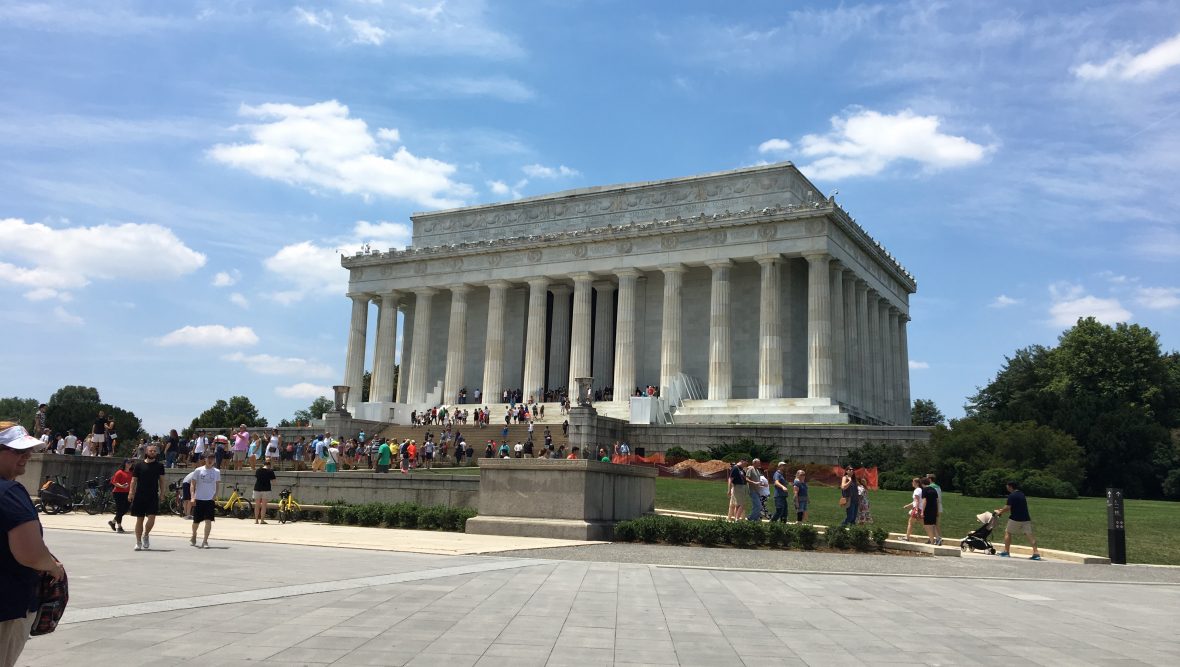

My name is Emma Frieze, and I am attending the Washington Journalism and Media Conference as a National Youth Correspondent from July 14-19. Stay tuned for updates on the conference and my experiences!
Quote of the Day for Friday, July l2, 2019:
-Harold Evans, Do I Make Myself Clear?
My summer has been transformed by the WJMC reading list. I have enjoyed the humor and relatability of Jessica Yellin’s character Natalie Savage; I have been amazed by incredible and unusual stories from the career of Marvin Scott and the inspiring story of Lesley Visser’s breakthrough into sports reporting; I have been humbled by the advocacy and world impact of MSD students after the tragedy of the Parkland shooting; I have asked myself what it really means to be myself and what it to means to be a journalist with the Red Hot Career Guide; I have been encouraged by the success of Sheba Turk and have listened to her guidance on professional growth Off Air; I have been haunted and awestruck by Pulitzer Prize Photographs.
All of the five books I have completed for my reading list so far have enriched my summer life. Though away from the routine of school, I have been educated, enlightened, and informed. These stories have taught me much about the journalism industry (including the ins and outs of mastering a professional look – thank you, Ms. Turk!). Many of these books I would not have picked up on my own. Thus, I am very grateful that I have come upon them in my academic path while preparing for WJMC.
However, there is a regret weighing heavily on me that I feel I must address. Early on in my preparation, I had made it a goal to finish all ten books on the WJMC Reading List before the conference. Unfortunately, that goal did not become a reality. I am currently only five and a half books into the reading list (Half = Do I Make Myself Clear? by Harold Evans – a great read, by the way). This past week, as I have been cramming to get more reading done, there have definitely been moments of guilt and a little stress.
Coming into this conference with limited experience in journalism and also fairly limited knowledge of politics, I decided early on in my preparation that I wanted to put hard work first. When I arrive at WJMC, I will not be the most experienced person on the room. I might not be the smartest or the most eloquent. There will be others better than me at many things, and I may not be the best writer, the best speaker, or, for that matter, the best anything. I will likely be lacking in superlatives. Therefore, I want to be someone who approaches this experience with an open mind and a willingness to learn. If I come in as a sapling, how much more will I be able to grow? My desire is not to stun the crowd or excel in the role-play newsroom; instead, it is to know in my heart that I come prepared and ready to work hard.
My busy summer schedule has knocked a tooth out of the preparation part. Dance camp, volunteering, various appointments, job shadowing, another conference, senior pictures, traveling – these are all words to describe what I have been doing when I have not been reading, blogging, researching, and note-taking in preparation for WJMC. My life is a balancing act (sometimes, it seems like a circus). I have learned over time that being an ambitious person with a tight schedule means that not everything will get done. When I have not been tearing away at one book to jump right into the next, I have been spending time with my family during my second-to-last summer before college and pursuing my passion for dance, which, ultimately, I cannot regret. These pursuits are essential to my personal story.
Therefore, I have decided to embrace where I am at in my preparation as I embark on my WJMC journey (watch out for that phrase, by the way – I enjoy overusing it). I am five and a half books into the WJMC Reading List, but that does not mean that is as far as I am going to get. I will keep reading until the conference, I will keep reading through it, and I will keep reading after its conclusion. Life is a journey (cliché, for shame), and it is a journey of learning. The preparation never ends! I am excited for the once-in-a-lifetime opportunities this conference will provide. I am looking forward to meeting new friends, and I am ready to meet challenges with a strong will and a willing attitude.
A little mantra:
I am Emma Frieze. I am inexperienced, and I am imperfect. Still, I am ready to work. I am eager. I am optimistic. I am confident.
I am me.
(2 Days until WJMC!)
Quote of the Day for Thursday, July 11, 2019:
-the late Katharine Graham, former Publisher of The Washington Post
Quote of the Day for Wednesday, July 10, 2019:
-Harold Evans, Do I Make Myself Clear?
Exciting news: This blog will now have a Quote of the Day for every day leading up to and during the Washington Journalism and Media Conference!
QOTD for Tuesday, July 9, 2019:
-Sheba Turk
(From a chapter title of Off Air: My Journey to the Anchor Desk by Sheba Turk)
I am very thrilled that in less than a week, I will begin my WJMC journey! I am looking forward to testing my skills, making new connections, and learning about the field of journalism. I have never been to Virginia before, and I am excited to view Fairfax from the lens of George Mason University. On the other hand, this will be my second time getting to see Washington D.C. as I had the privilege of going there on a day trip last summer. I am eager to see some of Washington’s incredible memorials and monuments again.

Without much prior experience in journalism, I am coming as someone eager to step outside of my comfort zone and realm of knowledge to experience a taste of this fast-moving industry. It is hard for me to believe that the conference and all the memories that will come with it are just six days away. I cannot wait to meet the other National Youth Correspondents that I have connected with through social media in person. Already, I am inspired by their inquisitive minds, displayed kindness, and strong beliefs. Stay tuned as I embark on this exciting journey!
Looking at Pulitzer Prize Photographs is an impactful, gripping experience to say the least. It is humbling and tear-jerking. Some pictures inspire, while others mortify and sadden. The experience of flipping through them in a book makes the experience tangible. Gliding a hand across a photograph printed on slightly textured paper adds to the realness of each moment.
The Pulitzer Prize Photographs: Capture the Moment is a collection of Pulitzer Prize Photographs and the stories of the places and people in and behind them. The book was edited by Cyma Rubin and Eric Newton, and my 2007 Edition was published by Business of Entertainment Inc. and, notably, the Newseum, Partner of WJMC.
I am not sure how I could go about “reviewing” this book, per se. I have no “favorite” picture. It is hard for me to say which pages were most impactful because each and every one left some impression with me. I would recommend this book for everyone, but not at every age or situation in life. For example, I would not recommend it to a young child and might not suggest it to someone already dealing with grief. The book is also one that is best taken slowly, so a person can consume each image and pay each moment the respect it deserves. It is impossible to get the full depth and meaning of each image by simply flipping through the pages. On the other hand, spending much time analyzing the horrific scenes in several of the images can be a very difficult experience.
Instead of giving a full review of this book, then, I will describe my first encounter with it. Before I received my own copy in the mail, before said copy was purchased, before I had registered for WJMC or even knew what it was, I encountered this book of the Pulitzer Prize Photographs in the classroom setting.
It was my sophomore year of high school, and I was enrolled in a World History class with a young teacher named Ms. Nusser. Now, from an outside perspective, our World History class was fairly traditional. We read from our textbooks, took notes over lectures, took tests, and wrote essays. We covered major world events from the Gutenberg Printing Press to World War II, from the story of Christopher Columbus (the not-so-glorified version) to Apartheid in South Africa. However, Ms. Nusser was always challenging us to look at history from multiple perspectives, to see each record of history as its own historical narrative that was part of the greater passage of time. She was relatable and fun but also strict, and she challenged us to study harder and learn more than many of us had ever had to before. As a foundation for each unit, we were required to know a base of historical context but were encouraged to grow our critical thinking skills beyond that, asking more Why? questions and following up with thoughtful analyses.
One of the highlights of Ms. Nusser’s class was what we would do on Thursday mornings. Thursday was simply known by World-History takers as “Triple-P Day,” or, really, Pulitzer Prize Photographs Day. As soon as the other students and I entered the classroom, “Triple P” would begin. We would quietly take our seats and look up at the whiteboard, which would show a projected photograph from the book Capture the Moment. We were provided no context for the image and were told to stay quiet, take out a piece of paper, and just WRITE!
For the first two minutes, we were to write down Observations of the image. Were there people? What did the setting, the environment look like? Was something happening and, if so, what? Was the image in black and white, or was it in color?
Focusing on making observations helped us to spot things we may not have noticed with a quick glance at each photograph. When we would discuss our observations later, one of us might point out an odd hat that someone in the background was wearing. We would know specific details like the number of people in each photo. My fellow students and I would point out “Easter egg” objects, things that were not obvious at first but became clear as day when pointed out. Overall, the exercise of observing made us better-informed viewers. It was almost like the ultimate Where’s Waldo? game except we were never looking for one thing in particular, and what we were finding was always real.
After we had written down our observations, we would be given a couple minutes to write down any Questions we had, like why are the people fighting? Who is that man sitting down? What happened here? What happened next?
Finally, we would be given about one minute to write down Predictions we had about the image. What did we think was happening? What continent, country, or even city did we guess the photograph had been taken in based on the setting and environment? What year did we think it had been taken, based on the quality of the image or the way people were dressed?
All of these observations, questions, and predictions made us better critical-thinkers, better witnesses of history, and better students. They made us take the time to appreciate photography as not just an art form but also as a historical record of humanity. I am grateful to Ms. Nusser for challenging me as a student and for helping me to see history with an open mind and fresh eyes. I am also grateful for the professionals who put together Capture the Moment, so it can stand as a testament to human stories worth remembering. Finally, I am thankful for the Pulitzer-Prize winning photographers themselves. They have witnessed incredible and sometimes horrible moments, often traveling miles upon miles and putting their lives on the line to get those “perfect shots” that have transformed the way we remember history, the way we look at the world around us, and finally, the way we decide to move forward. The world would not be the same without them.
Quote of the Day for Tuesday, June 25, 2019:
-Jessica Yellin, Savage News
Emma here with another Reading Review, except this is not quite a Reading Review at all. The Red-Hot Career Guide for News Reporting is a book of questions that might be asked in a job interview. I decided that instead of giving a review of the guide, it would be more appropriate to answer some of the questions myself in a get-to-know-me style, changing the questions so they apply to my personal experience.
Thus, without further ado, let us begin!
1. What are your standards of success in a job and how do you know when you are successful?
I would say that my primary standard for success would be asking myself, Did I achieve the desired outcome? In other words, did I accomplish what I set out to do? I also think that success is measured in how efficiently and cost-effectively a job was done. For example, in my position as a graphic designer for a printing business that operates through my high school, I know I am successful when I am able to design something effective that meets the goals and budgets of my clients. I feel that I am more successful with something I produce when I also know I used my time and own resources wisely.
2. Are you the type to check your inbox on vacation?
Yes! I may not check it as routinely as I would with my normal schedule, but I try to check my email daily whether I am on duty or not.
3. How has your birth order made you who you are?
I am the first child of two in my family. Having a younger sister has definitely taught me responsibility and interpersonal skills over the years. I am also the oldest of seven grandchildren on my dad’s side of the family. Being the oldest child has always required me to look out for others and be a leader. It probably made me grow up faster, too, because there is all the more reason to be mature and act properly when little eyes are watching.
4. How do you feel about mathematics?
I love math! I enjoy the challenge of problem-solving in math classes. When I was little, my father would always put me on the spot and ask me math questions when we were in the car together. I used to be nervous that I’d get a problem wrong, but I loved the rush when I came to a correct answer! Now, in my math classes, I no longer get as nervous when I’m put on the spot, but I still enjoy the sense of accomplishment that comes with finding the right answer to a difficult problem after critical thinking and meticulous work.
5. Why is there fuzz on a tennis ball?
I think it probably has something to do with friction. Tennis balls have to move and bounce very fast, so I would reason that why tennis balls have fuzz is that it helps them to bounce off tennis courts and racquets easier. Perhaps whoever made the first tennis ball also thought it would make for softer contact if someone got hit during a match. The fuzz also makes a tennis ball unique from other sports balls, so perhaps the fuzz is also to identify a tennis ball from, say, a softball. Of course, perhaps tennis balls are just not that into getting hair cuts.
Savage News is my favorite of the Reading List books so far. The imagined narrative of want-to-be White House Correspondent Natalie Savage is charming, witty, and unapologetically real. Jessica Yellin brings her experience as former CNN Chief White House Correspondent and knowledge of media politics into a well-crafted novel that shines.
First Impression: There’s a novel on the Reading List! I was quite thrilled to discover this. While I do enjoy reading nonfiction, picking up a book of this style made for a nice interlude before I returned to the others on my list. However, the inspiration from this book certainly did not come from fantasy. I was particularly intrigued going into the book with how Yellin’s personal experience as a White House correspondent would play into her description of lead character Natalie Savage’s efforts to earn her stripes and enter the same career role.
Post-Reading Thoughts: “Timely” is the word for Savage News. For instance, readers will find the #MeToo Movement to be much closer to the surface than the undertones of this book. Yellin uses her voice to “be noisy” in Savage News about serious workplace issues surrounding sexual harassment and gender inequality. She does so with an expert balance of frankness and sensitivity. The story also features recognizable elements like the ever-growing importance of social media in our society and even an imagined e-newsletter providing helpful narration for the story titled The Earlybird, which reminded me of my own daily doses of e-news from theSkimm.
Most true to the times, however, is Natalie Savage herself. Savage is relatable, admirable, flawed, and a triumph. She’s a modern heroine for the young, savvy working woman: a go-getter and a “stairs person,” someone who climbs her own way to the top. Meanwhile, Savage struggles to find a balance between work and her personal life; she wrestles to maintain professional integrity while making bold headlines. Reading her story of determination and sacrifice, I could not but root for a happy ending. Regardless of its fiction, Savage News brings light to real issues faced by working women and an exciting, highly sought-after career. I recommend Savage News to anyone who hopes to break chains of silence and seek truth (or anyone looking for a fresh voice and a good summer read!).
Lastly, I’ll leave you with this piece of advice from Savage (but, really, Yellin) herself: “Be noisy!”
 Experience WJMC